



Cold air outside, central heating inside, and by November your skin feels tight, flaky and sore. This is the winter skincare routine dry skin needs when the heating goes on: gentle cleansing, water first, then a cream that seals it in. Everything below uses products you can buy on the UK high street, with real prices checked today, and a day-by-day plan for the next two weeks.

Why Does Winter Dry Your Skin Out So Fast?
Your skin barrier is a brick wall. Skin cells are the bricks and natural lipids, mostly ceramides, are the mortar that holds water in and keeps irritants out. Winter attacks that mortar from both sides. Cold air holds very little moisture, so water evaporates from your skin faster, and central heating dries indoor air further. Research cited by dermatologists shows some ceramide fractions roughly halve in the colder months, which is why a moisturiser that worked in July suddenly stops working in November.
Hot showers and foaming cleansers make it worse. Hot water strips the lipids that are already in short supply, and a cleanser that leaves your face feeling squeaky has removed barrier lipids your skin cannot spare in winter. NHS guidance on emollients says to apply them whenever skin feels dry, typically two to four times a day or more, and that the single most useful moment is straight after washing, while skin is still slightly damp.
The Winter Skincare Routine for Dry Skin: Morning and Night
Four steps in the morning, five at night. Nothing else is needed, and adding more products is the most common way people make winter skin worse.
Morning. Rinse with lukewarm water, or use a gentle cream cleanser if you wore SPF overnight. While skin is still slightly damp, press in three or four drops of a hyaluronic acid serum. Hyaluronic acid can hold up to 1,000 times its weight in water, but only if you seal it in straight afterwards, so follow it at once with a rich cream. Finish with broad-spectrum SPF 30, even on grey days, because UVA passes through cloud and window glass all year.
Evening. Melt off makeup and SPF with a cleansing balm or a cream cleanser, never a foaming wash. Pat dry, leaving skin slightly damp, then repeat the serum and cream. On the driest patches, cheeks, around the nose and mouth, press a thin layer of a repair balm over the cream. That final layer is what stops the tight feeling by morning. Finish with lip balm and hand cream before bed, because lips and hands have almost no oil glands of their own.
What to Buy: Four Products, £6 to £20
You do not need a new shelf of products. These four cover every step, and each price below was checked live on 8 November 2026.
The Ordinary Hyaluronic Acid 2% + B5 (with Ceramides), 30ml, about £7 at Amazon UK. Five forms of hyaluronic acid plus ceramides and pro-vitamin B5. Use three or four drops on damp skin, morning and night. This is the water step, and it only works if a cream goes over it.
CeraVe Moisturising Cream, 454g pot, £17.50 at Boots, currently £13.12 on offer. Three essential ceramides and hyaluronic acid in a thick, fragrance-free cream. Use it on face and body, morning and night. The 454g pot lasts months, which makes it the cheapest per use of anything here. Our guide to the best skin product for glowing skin explains why a ceramide cream is the base every routine should be built on.
La Roche-Posay Cicaplast Baume B5+, 100ml, £19.90. A fragrance-free repair balm with 5% vitamin B5 and madecassoside. Use a pea-sized amount over your cream on sore, flaking patches, or as a night mask twice a week. This is the premium pick, and the one to buy first if your skin is already stinging.
NIVEA Creme, 200ml tin, £6 at UK supermarkets. Petrolatum, glycerin and lanolin alcohol in the classic blue tin. It is heavy, it is not elegant, and it works. Use it as a night cream on very dry patches, on hands, or as the final seal over your usual cream. The budget kit is just this and the serum: £13 for the two, using a cleanser you already own.

Your Two-Week Plan: What Changes on Day 3, Day 7 and Day 14
Days 1 to 3: stop the stripping. Swap the foaming cleanser for a cream cleanser or a lukewarm water rinse in the morning, and keep showers to five to ten minutes in lukewarm water. Tightness after washing usually eases within a few days once the harsh step is gone, so this is the fastest win in the whole plan.
Days 4 to 7: build the seal. By now the serum and cream routine should be twice daily without fail. If cheeks still feel rough by mid-afternoon, add the repair balm as a thin layer over your cream in the morning, and reapply a little cream to exposed areas before going outside. Run a humidifier in the bedroom if you have one, aiming for 30% to 50% indoor humidity, the range the US Environmental Protection Agency recommends.
Days 8 to 14: judge it honestly. Flaking should be mostly gone and makeup should sit properly again. If skin is still cracked, bleeding or very itchy after two weeks of a gentle routine, stop buying products and speak to a pharmacist or GP, because that is no longer ordinary winter dryness. Comfort comes in days, but visible repair takes the full fortnight.
How to Wear Makeup Over Dry Winter Skin
Two of the top five guides ranking for this keyword mention foundation clinging to dry patches, and not one of them explains how to fix it. The answer is preparation, not more coverage.
Start with the full morning routine and wait five minutes before makeup, so the cream has sunk in. Use a hydrating primer on the driest areas only, cheeks and around the nose, not all over. Choose a dewy or satin-finish foundation and apply it with a damp sponge, pressing rather than buffing, because buffing lifts flakes. Swap powder blush and bronzer for cream versions, and skip setting powder on dry patches entirely, using it only on the T-zone if you need it. For the full technique, our soft-focus skin makeup guide shows how diffused, dewy finishes hide texture instead of highlighting it, and our makeup for mature skin guide covers the same cream-over-powder rule for skin that is dry as well as lined.
On Retinol? Do This Reset Week First
Do not stop retinol completely for winter, but change how you use it. Cut back to two or three nights a week, apply it over a thin layer of moisturiser instead of straight onto bare skin, and skip it on any night your skin feels sore. This is the sandwich method dermatologists recommend, and it keeps the benefits while the barrier recovers.
If your skin is already stinging, flaking and reacting to products it used to tolerate, take a full reset week: cleanser, moisturiser and SPF only, no acids, no scrubs and no retinol. Once skin feels comfortable for several days, bring retinol back at the reduced frequency. If you are still flaking and stinging after a fortnight of repair, your barrier needs longer before any active returns.
Hands, Lips and Body: The Bits the Routine Forgets
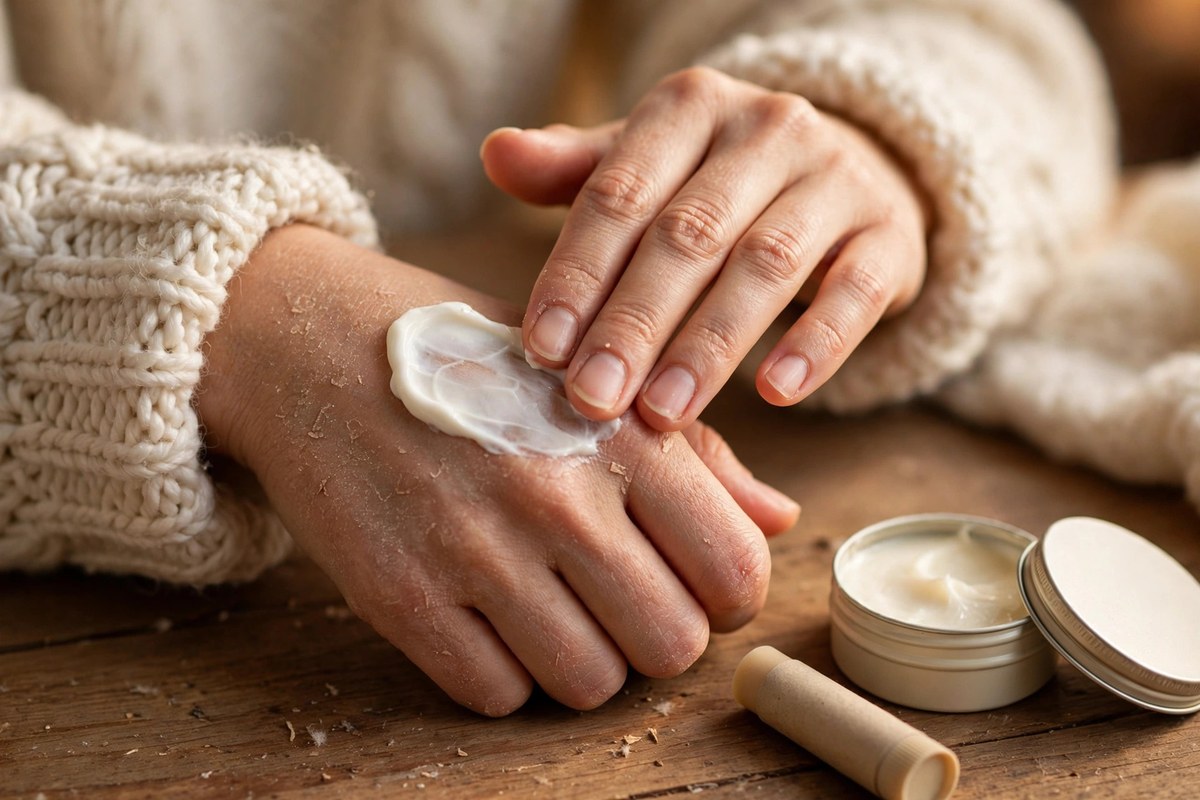
Hands crack first because they are washed constantly and have no oil glands on their backs. Keep a small tube of fragrance-free hand cream by every sink and reapply after each wash, not just at night. For badly chapped hands, smooth on a thick cream or a little petroleum jelly at bedtime and sleep in cotton gloves.
For lips, stop licking them: saliva evaporates and leaves them drier. Use a plain balm several times a day and before bed, and pick one with SPF for daytime. With good care, chapped lips usually improve within two to three weeks. For the body, moisturise within a few minutes of a lukewarm shower while skin is still damp, using a cream from a tub rather than a thin lotion. Shins, elbows and knees dry out fastest.
The 5 Mistakes That Keep Skin Dry All Winter
Scrubbing the flakes away. If flakes come from irritation, exfoliating gives one day of smoothness and then more sensitivity. Wait until skin no longer feels tight or sore.
Using the same foaming cleanser as in summer. It is often the single biggest cause of winter tightness, and the cheapest fix in this guide.
Skipping moisturiser in the morning. Morning cream protects skin before it meets cold air. Night cream alone cannot do that job.
Adding several new products at once. If skin reacts, you will not know which one caused it. Change one thing at a time and give it two weeks.
Dropping SPF while keeping retinol or acids. That is exactly when sunscreen matters most, because those actives make skin more sensitive to UV, and UVA is present all winter.
Conclusion: Water First, Then Seal It In
This winter skincare routine for dry skin comes down to two jobs: put water back in, then stop it escaping. Wash gently with lukewarm water, press a hyaluronic serum onto damp skin, seal it with a ceramide cream, and protect it with SPF. Do that twice a day for two weeks, and the tight, flaky feeling that started in November should be gone. The whole routine costs £13 at the budget end, and the only thing it demands is consistency. If you want to go further, our guide to how to look good without makeup shows what healthy, hydrated winter skin looks like once the routine is working.
Frequently Asked Questions
How long does a winter skincare routine take to fix dry skin?
Tightness after washing usually eases within a few days once you stop using a harsh cleanser, and flaking should be mostly gone by day 14 of a gentle routine. Give the full routine two to four weeks before judging it. If skin is still cracked, bleeding or very itchy after two weeks, speak to a pharmacist or GP rather than buying another product.
Should I use a cream or a lotion for dry skin in winter?
A cream, for most people. Lotions are mostly water, so they feel light but do not hold moisture in against cold, dry air. Creams and ointments contain more oil, and that oil is what locks water into the skin. Use a cream by day and an ointment, such as petroleum jelly or a thick balm, on the worst patches at night.
Can I still use retinol in winter with dry skin?
Yes, but change how you use it. Drop to two or three nights a week, apply it over a thin layer of moisturiser instead of onto bare skin, and skip it on any night your skin feels sore. If your skin is already stinging and flaking, pause all actives for a week of cleanser, moisturiser and SPF only, then bring retinol back at the reduced frequency.
Do I need SPF in winter in the UK?
Yes. UV levels are lower in winter but they are not zero, and UVA, the type linked to long-term skin ageing, passes through cloud and window glass. Keep a broad-spectrum SPF 30 in your morning routine on bright days, outdoors, and always if you use retinol or exfoliating acids.
Why does my foundation look flaky in winter?
Foundation clings to dry patches because it sits on top of flakes instead of blending into hydrated skin. Fix the skin first with the routine above, then wait five minutes after moisturiser before makeup, use a hydrating primer on dry areas, apply a dewy foundation with a damp sponge, and swap powder blush for cream blush. Skip setting powder on dry patches entirely.