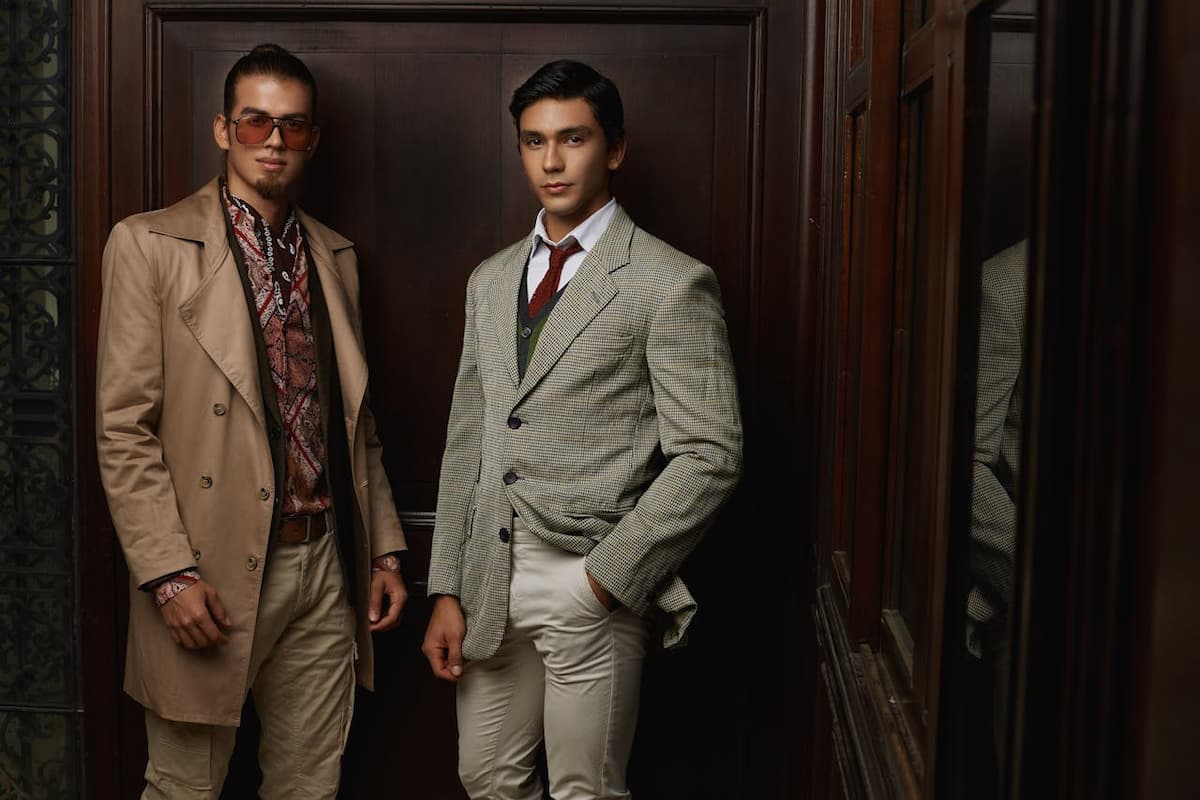

Luxury men’s fashion editorial photography settings can make or break a shoot. Get them right and a tailored suit looks sculptural, the fabric texture sings, and the whole frame feels like it belongs in a glossy magazine. Get them wrong and even the most expensive wardrobe looks flat.
After a decade of shooting menswear editorials for brands and independent designers, I have learned that “settings” means more than your camera dial. It covers exposure choices, lighting design, location, styling direction and the mood you build on set. This guide walks through all of it in plain terms.
What Are the Best Camera Settings for Luxury Men’s Fashion Editorial Photography?
For most luxury menswear editorials, the reliable baseline is:
- Aperture: f/4 to f/8 for full looks, f/2 to f/2.8 for portraits with soft background separation
- Shutter speed: 1/200s or faster to freeze fabric movement and subtle model motion
- ISO: 100 to 400 in studio, up to 800 on location
- File format: RAW, always, for maximum latitude in retouching
- White balance: Set manually or with a grey card to keep fabric tones accurate
That answers the quick question. Now let’s unpack why these numbers matter and where to break the rules.
Aperture: Detail Versus Drama
Luxury clients pay for craftsmanship, so the stitching, weave and drape must be visible. Shooting a full-length look at f/1.8 throws half the garment out of focus, which wastes the tailoring. Stay between f/5.6 and f/8 when the clothing is the hero.
For tighter portraits, on the other hand, a wider aperture around f/2.8 adds intimacy and separates the subject from the background. It is a stylistic choice, not a technical one, so decide based on the story of the frame.
Shutter Speed and Movement
Menswear editorials often rely on motion: a coat flaring mid-stride, a jacket thrown over the shoulder. A shutter speed of 1/250s to 1/500s freezes that movement cleanly. If you want intentional blur for an artistic spread, drop to 1/60s and pan with the model, but shoot plenty of safety frames first.
ISO and Image Quality
High-end publications scrutinise files at 100 percent zoom. Keep ISO as low as your light allows. Modern full-frame cameras handle ISO 800 comfortably, yet fabric texture still renders best at base ISO with proper lighting.
Lighting Setups That Define the Luxury Look
Lighting is where editorial photography separates itself from catalogue work. Three setups cover most luxury menswear briefs:
- Single hard light: One bare bulb or small reflector high and to the side. Produces crisp shadows and a cinematic, masculine edge. Ideal for tailoring and moody black-and-white spreads.
- Large soft key with negative fill: A big octabox close to the subject, with black flags on the opposite side. Soft on the skin, sculpted on the garment. This is the workhorse of premium menswear campaigns.
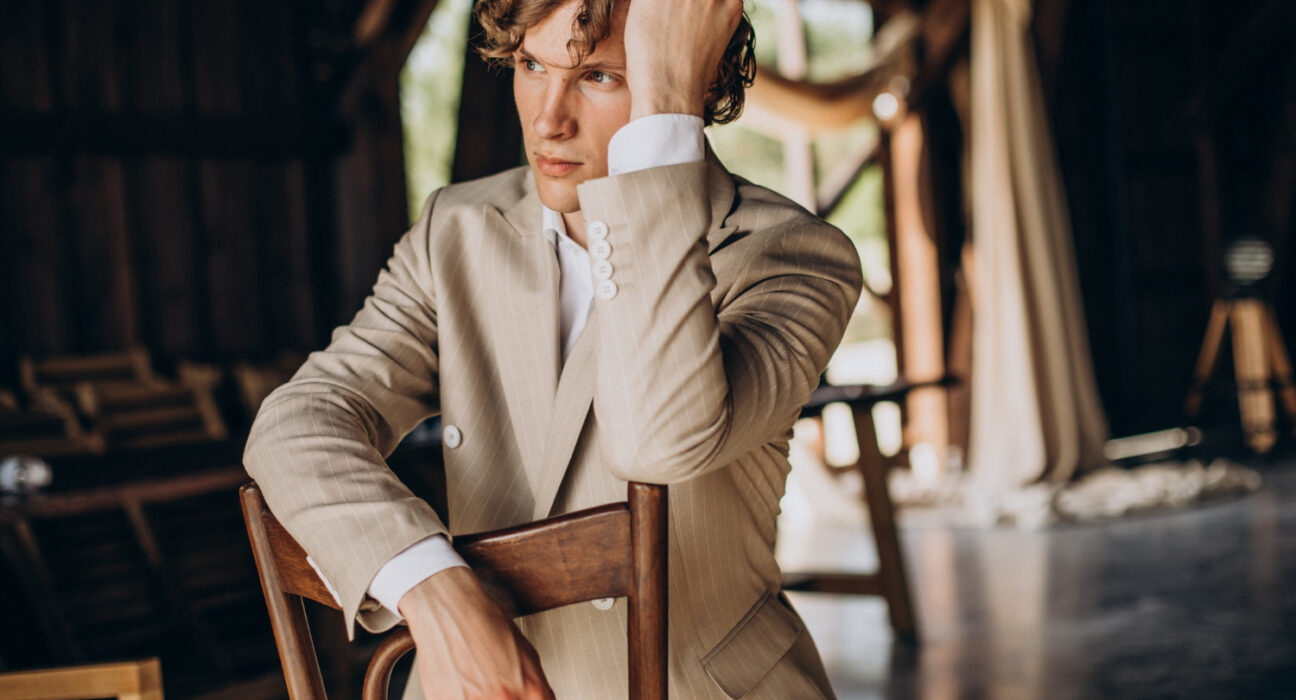
- Natural window light: North-facing window, model at a 45-degree angle, white reflector for gentle fill. Understated and authentic, perfect for quiet luxury aesthetics.
Whichever you choose, meter for the fabric first and the face second. A slightly darker face can be lifted in post. Blown-out highlights on a cream cashmere jumper cannot.
Location and Set Design Settings
The environment must match the price point of the clothing. In my experience, three types of setting consistently deliver:
- Architectural spaces: Brutalist concrete, marble lobbies, historic staircases. Strong lines echo sharp tailoring.
- Minimal studio backdrops: Hand-painted canvas in grey, olive or oxblood tones adds depth without distraction.
- Old-money exteriors: Country estates, private clubs, classic cars. These lean into heritage storytelling but need permits and planning.
Scout at the same time of day you plan to shoot. Light direction changes everything, and a location that glows at 5pm can look lifeless at noon.
Styling and Direction on Set
Camera settings only capture what is in front of the lens, so the styling settings matter just as much:
- Steam every garment twice, once before and once on set
- Use clips and pins at the back to perfect the silhouette on camera
- Direct the model with verbs, not poses: “walk towards me slowly”, “adjust your cuff”
- Keep hands busy with props such as watches, gloves or a coat over the arm
- Shoot tethered so the stylist and client can approve looks in real time
Small adjustments, like rolling a shoulder seam or angling a lapel, often improve a frame more than any lighting tweak.
Post-Production Settings for a Premium Finish
Editing should refine, not reinvent. My standard workflow:
- Correct white balance and exposure in RAW processing
- Apply subtle contrast with a gentle S-curve
- Retouch skin lightly, preserving natural texture
- Clean stray threads and lint from garments
- Add a restrained colour grade, often desaturated greens and warm shadows
- Sharpen selectively on fabric detail, never globally
Over-retouched images undermine trust, and luxury audiences notice. Honest texture is part of the value story.
Common Mistakes to Avoid
- Shooting wide open and losing garment detail
- Mixing light sources with different colour temperatures
- Ignoring the model’s grooming, which reads instantly in menswear
- Over-stylised locations that compete with the clothing
- Heavy HDR or aggressive clarity sliders that cheapen the file
Conclusion
Mastering luxury men’s fashion editorial photography settings comes down to intention. Choose an aperture that honours the tailoring, a shutter speed that suits the movement,Fashionable Winter Clothing for Men lighting that sculpts rather than flattens, and locations that whisper wealth instead of shouting it. Combine technical discipline with strong creative direction and your editorials will hold their own in any premium publication or brand campaign.
Frequently Asked Questions
1. What aperture is best for luxury men’s fashion editorial photography settings?
Use f/5.6 to f/8 for full-length looks so tailoring and fabric detail stay sharp. Switch to f/2 to f/2.8 for portraits when you want soft background separation.
2. Do I need studio lighting for a luxury menswear editorial?
Not always. A north-facing window with a reflector produces a beautiful quiet-luxury look. Studio strobes give you more control and consistency, which matters for multi-look campaigns.
3. Which camera is best for fashion editorial photography?
Any modern full-frame body with 24 megapixels or more works well. Lens choice matters more: an 85mm f/1.4 for portraits and a 35mm or 50mm for environmental looks cover most briefs.
4. How should I light dark suits and black fabrics?
Use a large soft source at an angle so highlights skim across the fabric and reveal texture. Add a rim or kicker light behind the subject to separate dark clothing from the background.
5. What makes a photograph feel “luxury” rather than commercial?
Restraint. Controlled lighting, honest retouching, elegant locations and confident, understated posing signal quality. Loud effects and heavy filters read as mass-market.