


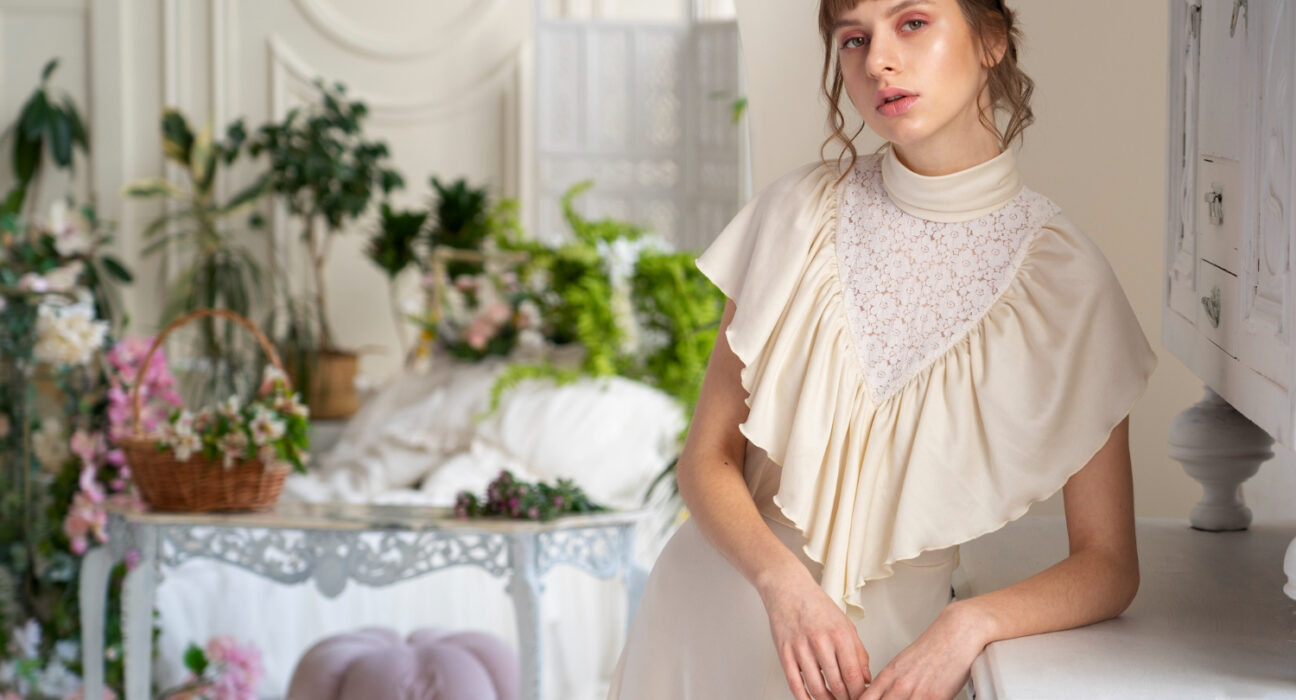
If you want to make a maid outfit in the classical style, you will need a black or dark dress, a white pinafore apron, a mob cap or headband, and detachable white cuffs and collar. This guide walks you through the whole process, from choosing period-accurate fabrics to sewing each piece, based on the Victorian and Edwardian uniforms that defined the look.
I have sewn several historical costumes over the years, including two full Edwardian maid uniforms for theatre productions. The classical silhouette is far simpler than most people expect. It rewards patience more than advanced skill, which makes it a brilliant project for confident beginners.
What Defines a Classical Maid Outfit?
A classical maid outfit is a domestic servant uniform inspired by 19th and early 20th century Britain and France. It consists of a long, modest dress in black or dark grey, a crisp white apron, a white cap, and plain white cuffs and collar.
The key features are:
- A floor-length or mid-calf dress with long sleeves and a high neckline
- A white bib apron or pinafore with ruffled straps that cross or button at the back
- A mob cap or ruffled headband in white cotton
- Detachable white collar and cuffs, originally designed for easy laundering
- Natural fabrics such as cotton, linen or wool blends
This differs from the modern “French maid” costume, which is shorter and decorative. The classical version prioritises modesty, durability and a clean, uniform appearance.
Fabrics and Materials You Will Need
Fabric choice makes or breaks the period look. Victorian servants wore hard-wearing natural fibres, so avoid anything shiny or stretchy.
For a full outfit, gather the following:
- 3 to 4 metres of black cotton poplin, twill or lightweight wool for the dress
- 1.5 metres of white cotton or linen for the apron
- 0.5 metres of white cotton for the cap, collar and cuffs
- Broderie anglaise or cotton lace trim (optional, for the apron and cap edges)
- Matching thread, hook-and-eye closures, and flat black buttons
- Elastic or cotton tape for the cap
Expect to spend between £30 and £60 on materials in the UK, depending on fabric quality. Charity shops are a good source of black dresses you can adapt, which cuts both cost and sewing time.
How to Make a Classical Maid Outfit: Step by Step
Here is the process I follow, broken into five stages. Allow a full weekend if you are sewing everything from scratch.
Step 1: Take Accurate Measurements
Measure the bust, waist, hips, shoulder to wrist, and shoulder to hem. Classical dresses sit at mid-calf or ankle, so measure to where you want the skirt to fall. Add 2 to 3 centimetres of seam allowance throughout.
Step 2: Make or Adapt the Dress
You have two options here.
Option A: Sew from a pattern. Look for an Edwardian day dress or shirtwaist pattern. Simplicity, Butterick and Truly Victorian all offer suitable designs. Cut the bodice and skirt separately, join them at the waist, and set in long sleeves gathered slightly at the shoulder.
Option B: Adapt an existing dress. Start with a plain black midi or maxi dress with sleeves. Remove any modern details such as zips on show, add a row of small buttons down the front bodice, and attach a white Peter Pan collar.
In my experience, adapting a dress saves six to eight hours and looks just as convincing on stage or at events.
Step 3: Sew the Pinafore Apron
The apron is the signature piece, so give it your best work.
- Cut a rectangle roughly 60 cm wide by 75 cm long for the skirt panel
- Cut a bib panel about 25 cm by 30 cm
- Hem all edges, then gather the skirt panel onto a waistband
- Attach shoulder straps that cross at the back and button onto the waistband
- Add broderie anglaise trim along the bib and strap edges for the classic ruffled look
Press every seam as you go. A crisply ironed apron reads as “period accurate” far more than any other detail.
Step 4: Make the Mob Cap
Cut a circle of white cotton about 45 cm in diameter. Sew a narrow channel 4 cm in from the edge, thread elastic through it, and adjust until it sits comfortably. The gathered edge forms a natural ruffle. For a later Edwardian look, swap the cap for a ruffled white headband instead.
Step 5: Finish with Collar, Cuffs and Details
Cut simple rectangles for cuffs and a curved band for the collar, hem them, and attach with small buttons or press studs so they can be removed for washing, exactly as Victorian servants did. Finish the outfit with black stockings or tights and plain black flat shoes.
Common Mistakes to Avoid
A few errors will instantly undermine the classical look:
- Using satin or polyester, which shines under light and reads as modern
- Making the skirt too short, since anything above the knee shifts into costume territory
- Skipping the ironing, because limp cotton looks unfinished
- Over-trimming the apron, as genuine uniforms were plain and practical
Balance is the goal. Real domestic uniforms were designed to be tidy and unobtrusive, not decorative.
Conclusion
To make a maid outfit in the classical style, focus on three things: modest natural fabrics, a well-pressed white pinafore, and simple period details like the mob cap and detachable collar. Whether you sew from scratch or adapt an existing dress, the project is achievable in a weekend and costs far less than buying a quality reproduction. Start with the apron, since it is the piece people notice first, and build the rest of the uniform around it.
Frequently Asked Questions
1.What fabric is best for a classical maid outfit?
Cotton poplin or twill is best for the dress, and plain white cotton or linen for the apron and cap. Natural fibres hold a crisp press and match the fabrics used in genuine Victorian and Edwardian uniforms.
2.How long does it take to make a maid outfit in the classical style?
Sewing everything from scratch takes 12 to 16 hours for a confident beginner. Adapting an existing black dress reduces this to 4 to 6 hours, since only the apron, cap, collar and cuffs need to be made.
3.What is the difference between a classical and a French maid outfit?
A classical maid outfit is long, modest and based on real servant uniforms from the 1800s and early 1900s. The French maid style is a short, decorative costume that emerged from 20th century theatre and fancy dress.
4.Can I make a classical maid outfit without a sewing machine?
Yes, though it takes longer. The apron, cap, collar and cuffs are all straight seams that can be hand-sewn. For the dress, adapting a ready-made black dress avoids the heaviest sewing entirely.
5.How do I keep the white apron looking crisp?
Wash it separately in warm water, use a little laundry starch, and iron it while slightly damp. This is also why collars and cuffs were traditionally detachable, so they could be laundered frequently.