


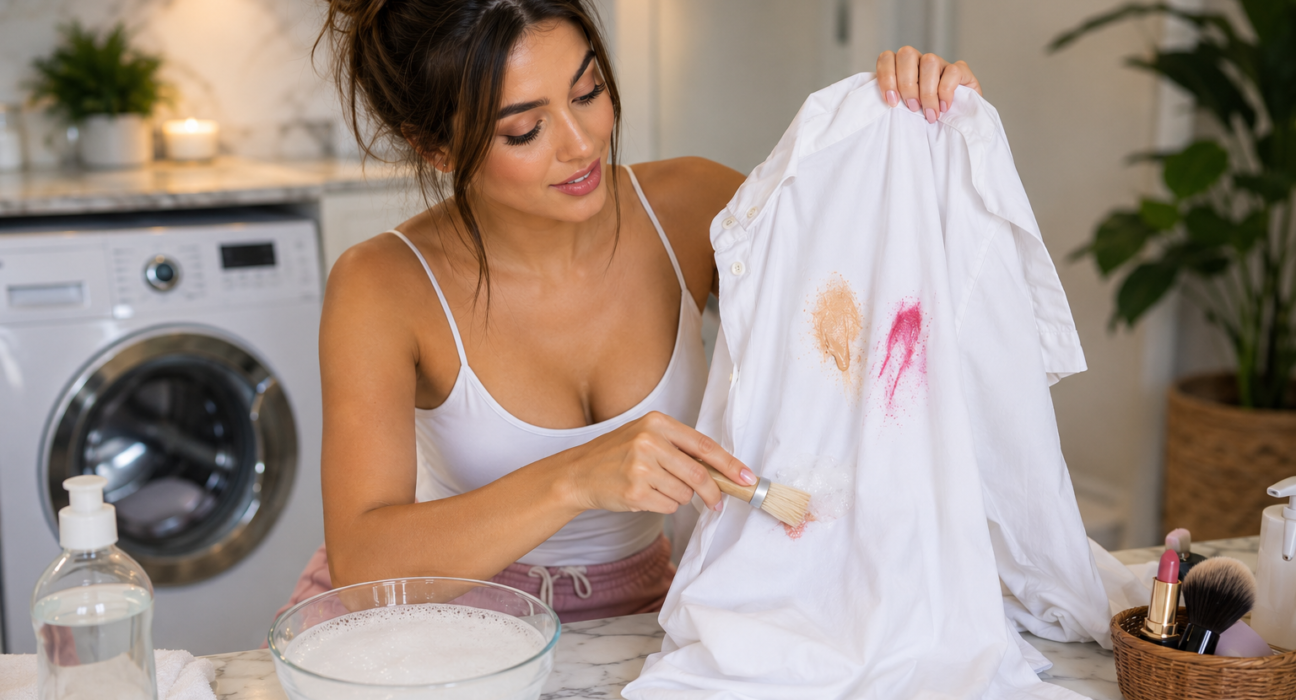
Makeup stains have a habit of appearing at the worst possible moment. A smudge of foundation on a white shirt collar or a streak of mascara on a blouse can feel like the end of that garment. The good news is that knowing how to get makeup out of clothes properly, and quickly, makes most stains fully treatable at home without any special equipment.
This guide walks through the exact methods professionals and experienced launderers use, based on the type of makeup and the type of fabric involved.
Quick Answer
To get makeup out of clothes, gently scrape off excess product, apply a small amount of dish soap or stain remover to the reverse side of the fabric, then wash on the coolest suitable setting.
What Makes Makeup Stains So Difficult to Remove?
Most makeup products are oil-based or wax-based, which means they bond with fabric fibres rather than sitting on the surface. This is why makeup stains often set harder the longer they’re left, and why hot water or a tumble dryer can make things worse by fixing the stain permanently. Understanding this is the first step in choosing the right removal method.
How to Get Makeup Out of Clothes
Foundation and Concealer Stains
Scrape off any excess with a spoon or blunt knife. Apply a small amount of washing-up liquid directly to the mark and rub gently with your fingers. Leave for ten minutes, then rinse with cool water before washing as normal.
Lipstick and Lip Stain
Blot, don’t rub, to avoid spreading the pigment. Dab rubbing alcohol or a make-up remover wipe onto the area, then treat with a stain remover before laundering.
Mascara and Eyeliner
Let any wet product dry fully first. Once dry, gently brush off the flakes, then treat the remaining mark with a small amount of micellar water or gentle soap.
Powder Products (Blush, Bronzer, Eyeshadow)
Shake off loose powder outdoors if possible. Use a soft brush or sticky tape to lift remaining particles before applying water, as wetting powder too early can smear it further into the fibres.
Benefits of Treating Makeup Stains the Right Way
- Extends the life of clothing and reduces waste
- Saves money on replacements or professional dry cleaning
- Prevents oil-based stains from oxidising and turning yellow
- Protects delicate fabrics like silk, wool and linen from damage
Real-Life Use Cases
A common scenario is a foundation mark transferring from a collar during a video call or event. Treating it within the first hour, before it dries fully, dramatically increases the chance of complete removal. Wedding makeup artists often recommend keeping micellar water on hand for exactly this reason, since guests frequently brush against clothing during hugs and photos.
Latest Trends in Stain Removal
Interest in gentle, eco-friendly stain removal has grown steadily, with more households moving away from harsh bleach-based products in favour of enzyme cleaners and biodegradable formulas. Fabric care brands have also reported rising demand for pre-treatment sprays designed specifically for oil-based cosmetics, reflecting how common this problem is across households. As with any stain-removal statistic, figures vary by source and region, so it’s worth confirming current data before publishing if precise numbers are needed for the final piece.
Common Mistakes to Avoid
- Using hot water before the stain is fully treated
- Rubbing vigorously, which pushes makeup deeper into fibres
- Tumble drying before confirming the stain has gone
- Mixing cleaning chemicals, such as bleach and alcohol, on the same fabric
- Ignoring the care label, especially on silk or wool
Expert Tips for Stubborn Stains
- Always test any cleaning product on an inside seam first
- Treat stains from the back of the fabric to push makeup out, not in
- Repeat gentle treatments rather than increasing product strength
- For set-in stains, a paste of baking soda and water can help lift residue before washing
Key Takeaways
- Act quickly, but let dried products fully dry before brushing off
- Match the treatment to the makeup type, not a generic approach
- Avoid heat until the stain is completely gone
- Test products on a hidden area first to protect delicate fabrics
Conclusion
Getting makeup out of clothes doesn’t need to be stressful once you know which method suits the product and fabric involved. With the right first response and a little patience, Old Fashion most foundation, lipstick, mascara and powder stains can be fully removed at home. Keep a small stain-removal kit handy so you’re always ready the next time makeup ends up somewhere it shouldn’t.
Frequently Asked Questions
1.How do you get makeup out of clothes after it’s dried?
Gently brush off dried residue, then treat the remaining mark with dish soap or micellar water before washing.
2.Does toothpaste remove makeup stains from clothes?
It’s not recommended, as toothpaste can bleach or discolour fabric rather than lift the stain safely.
3.Can you remove old, set-in makeup stains?
Yes, though it may take repeated gentle treatments with an enzyme-based stain remover rather than a single wash.
4.Is dry cleaning necessary for makeup stains?
Only for delicate fabrics like silk or wool, or if home treatment hasn’t fully removed the mark.
5.What household item works best on makeup stains?
Washing-up liquid is one of the most effective and widely available options for most makeup types.