


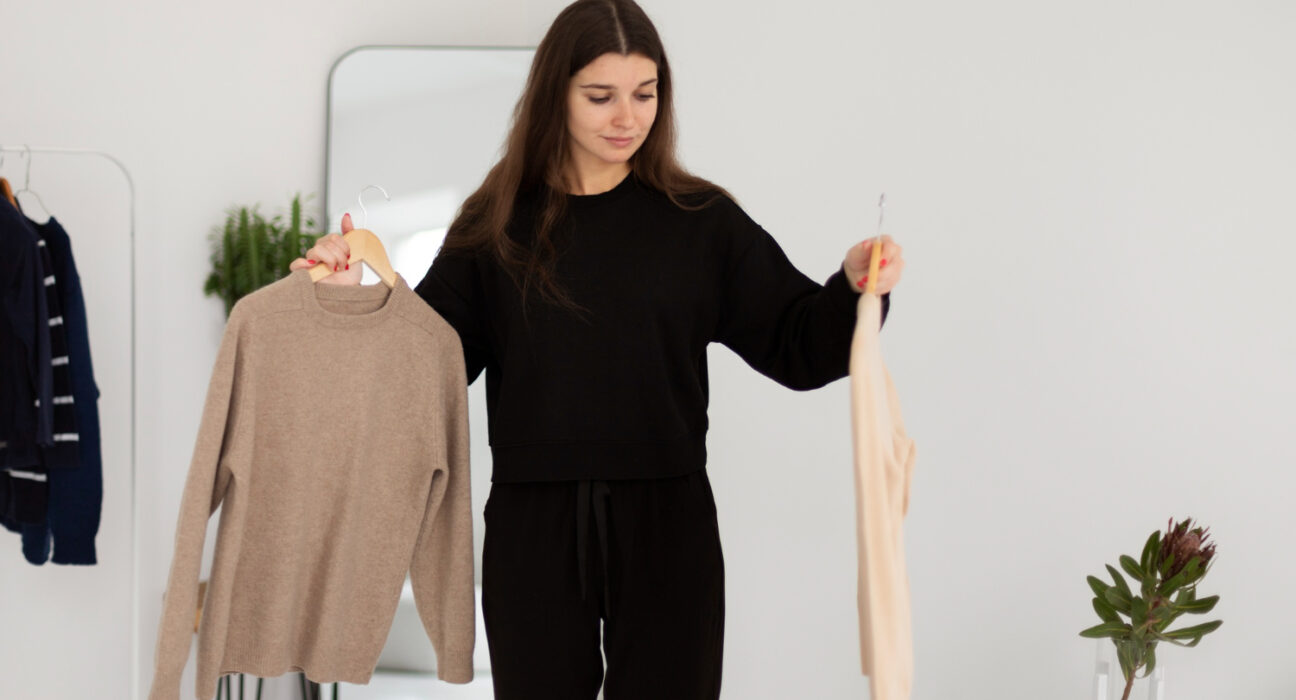
A minimalist wardrobe is not about owning the fewest clothes possible. It is about creating a collection of pieces that work together, fit your lifestyle, and make getting dressed easier every day.
Instead of buying more clothes and still feeling like you Fashion in the 80’s have nothing to wear, a minimalist wardrobe helps you focus on versatile clothing, timeless styles, and outfits you genuinely enjoy wearing.
A well-designed minimalist wardrobe saves time, reduces unnecessary spending, and helps you create simple daily outfits without overthinking your choices.
What Is a Minimalist Wardrobe?
A minimalist wardrobe is a carefully selected collection of clothing where every item has a purpose.
Each piece should:
- Fit your lifestyle
- Match your personal style
- Work with multiple outfits
- Be comfortable and practical
- Be worn regularly
Minimalism in fashion does not mean wearing only black, white, or beige. It means reducing unnecessary choices and keeping clothing that adds value to your everyday life.
A good minimalist wardrobe is built around quality, versatility, and intentional buying decisions.
Minimalist Wardrobe vs Capsule Wardrobe
These terms are often used together, but they are slightly different.
A capsule wardrobe usually refers to a limited collection of clothing designed to create many outfit combinations.
A minimalist wardrobe is a broader lifestyle approach focused on owning fewer, more useful items.
For example:
- A capsule wardrobe may contain 30 carefully selected pieces for a season.
- A minimalist wardrobe may include your complete clothing collection, including occasion wear, outerwear, and personal favourites.
The goal is not a specific number of items. The goal is having clothes that work for you.
Step 1: Audit Your Current Wardrobe Before Buying Anything
The biggest mistake people make is shopping first.
Start by reviewing what you already own.
Take everything out and divide your clothing into four categories:
Keep
Items you regularly wear and feel confident in.
Repair
Clothes that are useful but need small fixes, such as buttons, alterations, or stitching.
Donate or Sell
Items that no longer fit your lifestyle, taste, or body.
Unsure
Pieces you rarely wear but are not ready to remove.
A useful question is:
“If I went shopping today, would I buy this item again?”
If the answer is no, it probably does not belong in your minimalist wardrobe.
Step 2: Identify Your Everyday Outfit Needs
Your wardrobe should match your real life, not someone else’s Pinterest board.
Think about your weekly routine:
- Do you work from home?
- Do you need office outfits?
- Are you often travelling?
- Do you attend formal events?
- Do you prefer casual clothing?
For example:
Someone working remotely may need:
- Quality T-shirts
- Comfortable trousers
- Overshirts
- Casual trainers
Someone working in an office may need:
- Tailored trousers
- Shirts
- Blazers
- Smart shoes
The best minimalist wardrobe is personalised.
Step 3: Build Your Foundation Pieces
A strong minimalist wardrobe starts with reliable basics.
Tops
Useful everyday options include:
- White or neutral T-shirts
- Black T-shirts
- Oxford shirts
- Lightweight knitwear
- Simple jumpers
- Plain polos
Bottoms
Consider:
- Dark jeans
- Straight-leg trousers
- Chinos
- Tailored trousers
- Comfortable everyday trousers
Outer Layers
Useful layering pieces include:
- Denim jacket
- Wool coat
- Overshirt
- Blazer
- Lightweight jacket
Shoes
Choose footwear that works with multiple outfits:
- White trainers
- Black or brown leather shoes
- Everyday boots
The exact pieces will vary, but the principle stays the same: every item should earn its place.
Step 4: Choose a Simple Colour Palette
A coordinated colour palette makes creating outfits much easier.
Many minimalist wardrobes use colours such as:
- Black
- White
- Grey
- Navy
- Beige
- Brown
- Olive
These colours are easy to combine and reduce the chance of buying items that only work with one outfit.
You can still add personality through:
- Accessories
- Textures
- Patterns
- Statement pieces
Minimalism does not mean boring. It means intentional.
Step 5: Create Simple Outfit Formulas
One of the biggest benefits of a minimalist wardrobe is having reliable outfit combinations.
Examples:
Casual Daily Outfit
White T-shirt + dark jeans + trainers + overshirt
Smart Casual Outfit
Oxford shirt + chinos + loafers
Cold Weather Outfit
Knit jumper + trousers + wool coat + boots
Weekend Outfit
Plain sweatshirt + jeans + trainers
Creating outfit formulas removes daily decision fatigue.
Step 6: Shop With a Minimalist Mindset
Before purchasing anything new, ask:
- Does this work with at least three items I already own?
- Will I wear this regularly?
- Does it fit my lifestyle?
- Is the quality good enough to last?
- Am I buying it because I need it or because it is on sale?
A minimalist wardrobe is built slowly.
Buying fewer, better pieces usually creates a more functional wardrobe than constantly replacing cheap clothing.
Common Minimalist Wardrobe Mistakes
Buying basics you do not enjoy wearing
A plain T-shirt is only useful if the fit, fabric, and style work for you.
Copying someone else’s wardrobe
A minimalist wardrobe should reflect your own lifestyle.
Removing too much too quickly
Minimalism is not about regret. Keep useful items until you are confident they no longer serve you.
Ignoring fit
Even expensive clothing will not look right if the fit is wrong.
Simple clothing works best when the shape and proportions suit you.
How Many Clothes Should Be in a Minimalist Wardrobe?
There is no universal number.
Some people prefer 20 to 30 pieces, while others may need 50 or more depending on their work, climate, hobbies, and lifestyle.
The right minimalist wardrobe is the smallest collection that allows you to dress comfortably and confidently.
Benefits of Building a Minimalist Wardrobe
A minimalist wardrobe can help you:
- Spend less on unnecessary clothing
- Save time choosing outfits
- Reduce wardrobe clutter
- Understand your personal style better
- Create more outfit combinations with fewer pieces
The biggest benefit is simplicity. Your wardrobe becomes a tool that supports your daily life instead of creating more decisions.
Conclusion
Building a minimalist wardrobe is about creating a simpler relationship with clothing. It is not about following strict rules or owning a certain number of items.
By choosing versatile pieces, understanding your lifestyle, and focusing on quality over quantity, you can create simple daily outfits that feel comfortable, stylish, and effortless.
A successful minimalist wardrobe is one where getting dressed becomes easier because every item has a purpose.
Frequently Asked Questions
What is the easiest way to start a minimalist wardrobe?
Start by reviewing your existing clothes. Remove items you no longer wear, identify missing essentials, and slowly replace unsuitable pieces with versatile options.
How many items should a minimalist wardrobe have?
There is no fixed number. A minimalist wardrobe can range from around 20 pieces to 50 or more depending on your lifestyle, climate, and personal needs.
Do minimalist wardrobes have to use neutral colours?
No. Neutral colours are popular because they mix easily, but a minimalist wardrobe can include any colours that work well together.
Is a minimalist wardrobe the same as a capsule wardrobe?
Not exactly. A capsule wardrobe is usually a smaller seasonal collection, while a minimalist wardrobe is a broader approach to owning fewer but more useful clothes.
Can I build a minimalist wardrobe on a budget?
Yes. The best approach is to start with what you already own, avoid impulse purchases, and gradually invest in pieces that you will wear frequently.