

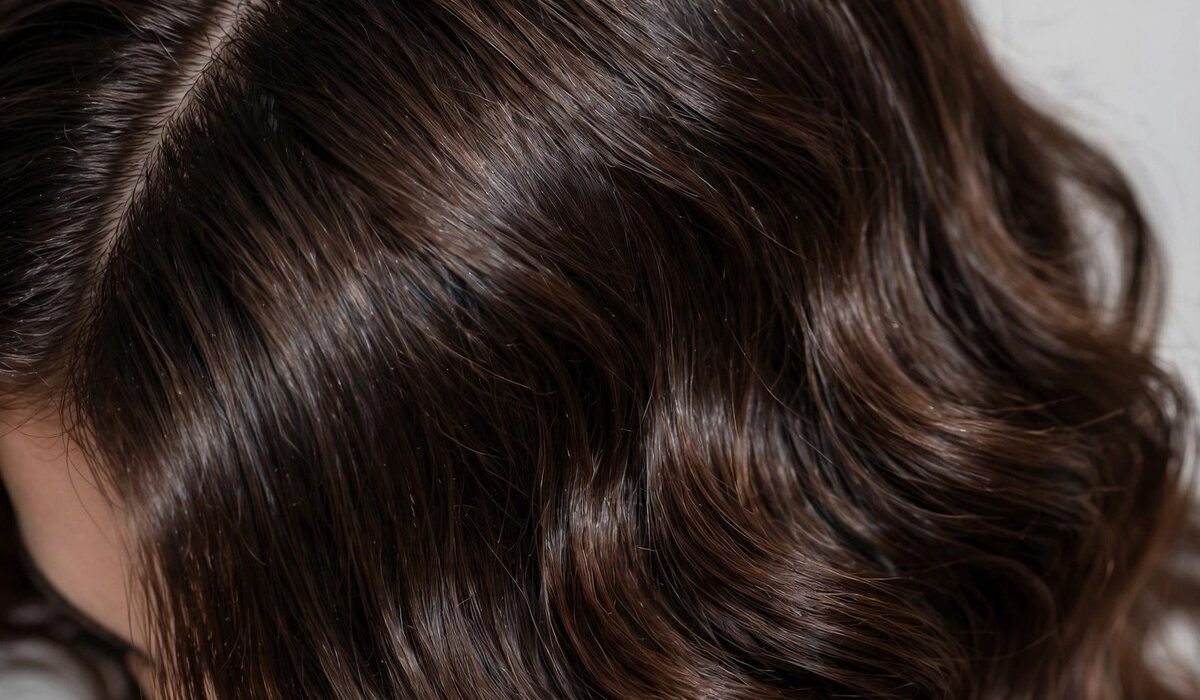
Side part hairstyles 2026 have quietly taken over, and if you are still loyal to your middle part, you have probably noticed the shift on runways, red carpets and your own feed. The good news is that the modern side part looks nothing like the stiff, sprayed sweep of the Noughties. It is softer, more personal and far easier to wear. This guide shows you how to style the comeback parting for your hair type and face shape, plus the small mistakes that make it look dated.
Why Side Part Hairstyles 2026 Feel Different
For years, the middle part had the confidence of a law: clean, symmetrical and everywhere. But trends move like a pendulum, and stylists saw this one swinging back long before the rest of us did. Nicole Petty, brand director at Milk and Blush, praised the return of deep side parts in her 2026 predictions, noting that the added root lift and face-framing sweep make simple styles feel more polished. Celebrity hairstylist Benjamin Mohapi went further, declaring that the side part was about to make a big comeback as fashion shoots nodded to the eighties.
The runways agreed, with Vogue documenting side parts at Andreas Kronthaler for Vivienne Westwood, Dior, Saint Laurent, Hermes and Acne Studios. Then the celebrities followed: Olivia Dean made a swoopy side part her signature, Olivia Rodrigo wore a dramatic one to the Academy Museum Gala, and Kylie Jenner chose an off-centre part for the 2026 Oscars. For a practical walkthrough of making the switch, Grazia’s stylist guide to switching your part covers the two-second technique in detail.
The Modern Side Part vs the Dated One
The difference between a side part that looks current and one that looks stuck in 2007 comes down to a handful of details. Check your style against this list before you leave the house.
| Dated tell | The 2026 fix |
|---|---|
| A severe, ruler-straight white line across the scalp | Soften the first inch with a fingertip instead of a fine comb |
| Hair glued flat across the forehead | Lift the roots up first, then sweep them over: think up, then over |
| Half the forehead hidden under one heavy sheet | Keep the depth to one or two finger-widths off centre |
| A helmet of hairspray that never moves | Choose one point of polish and let the rest of the hair move |
| Lengths flat-ironed with zero texture | Add a bend, a wave or air-dried texture through the lengths |
How to Find Your Best Part Placement
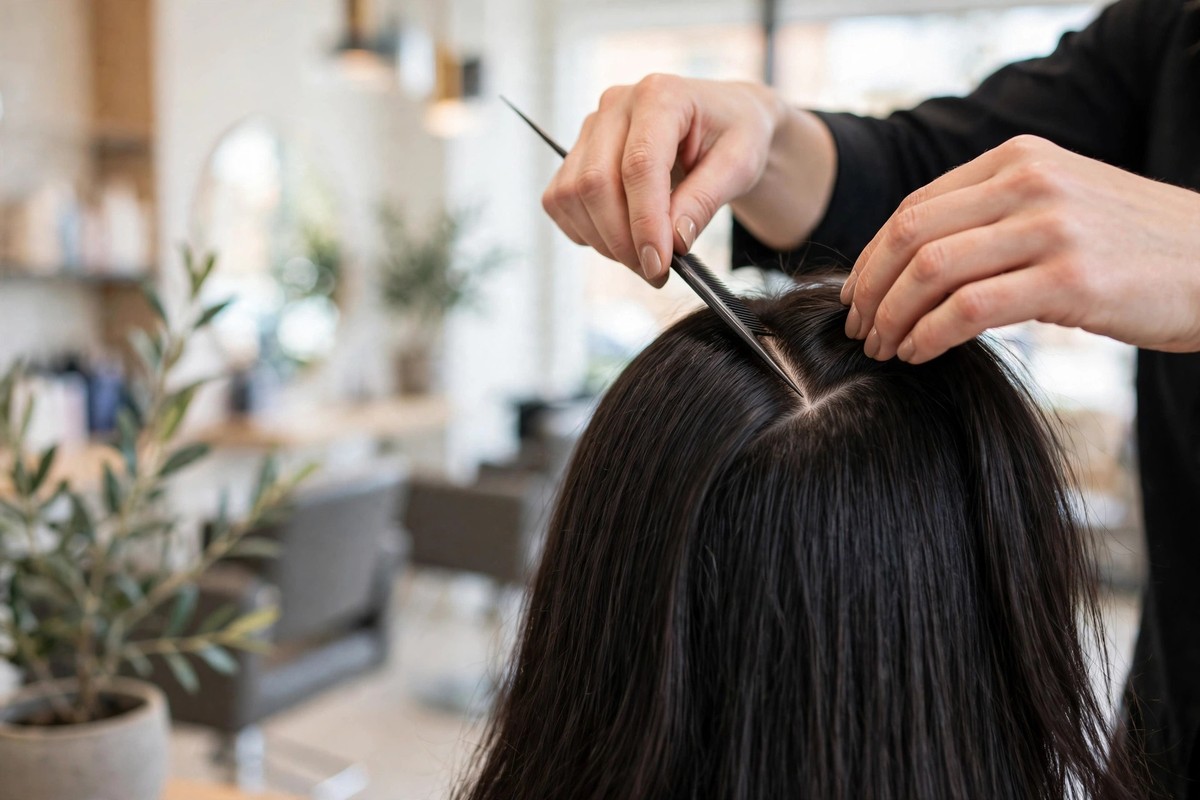
Start smaller than you think. Move the part one finger-width away from the centre, live with it for a day, and only go deeper if you want more asymmetry. You can always sweep further over, but starting at maximum depth makes it harder to see which small change actually helped.
For a more deliberate line, use the highest point of your eyebrow arch as a visual guide. Lili Bridger, senior stylist at Larry King in London, suggests drawing the parting with a pintail comb starting just above the arch, and stylists quoted by British Vogue recommend the same placement for a sleek finish. Treat the arch as a starting point rather than a commandment, since your natural growth pattern may ask the line to shift slightly.
Let your cowlick vote. Parting with its natural direction feels easier, while parting against it creates useful lift. Try both sides in daylight on freshly washed hair. For fine hair, a slightly diagonal part can create more visible density than a straight line, while thick or curly hair suits a wider part that distributes weight.
Try the diagonal part that keeps coming up in 2026: start around the middle of one eyebrow and drift back toward the crown. It adds volume at the front and looks almost accidental, as if your hair simply fell that way.

7 Side Part Hairstyles to Try This Year
1. The tucked lob
Draw the part two or three centimetres off centre, smooth the smaller side behind your ear, and leave the lengths loose with a tiny amount of cream at the temple. The easiest and most flattering version of the trend, it pairs beautifully with strong eye makeup like our eye maxxing makeup trend guide.
2. The lifted blowout
Work mousse into damp roots, then blow-dry the top in the opposite direction before letting it fall back into the part. The lift at the crown is what makes the style read as modern. For red-carpet inspiration, browse Zendaya’s best street style looks of 2026.
3. The side-swept pixie
Shorter lengths benefit enormously from a directional part because it adds definition and a touch of attitude. Keep the fringe long enough to sweep and let the texture stay piecey rather than polished flat.
4. Soft waves with a deep part
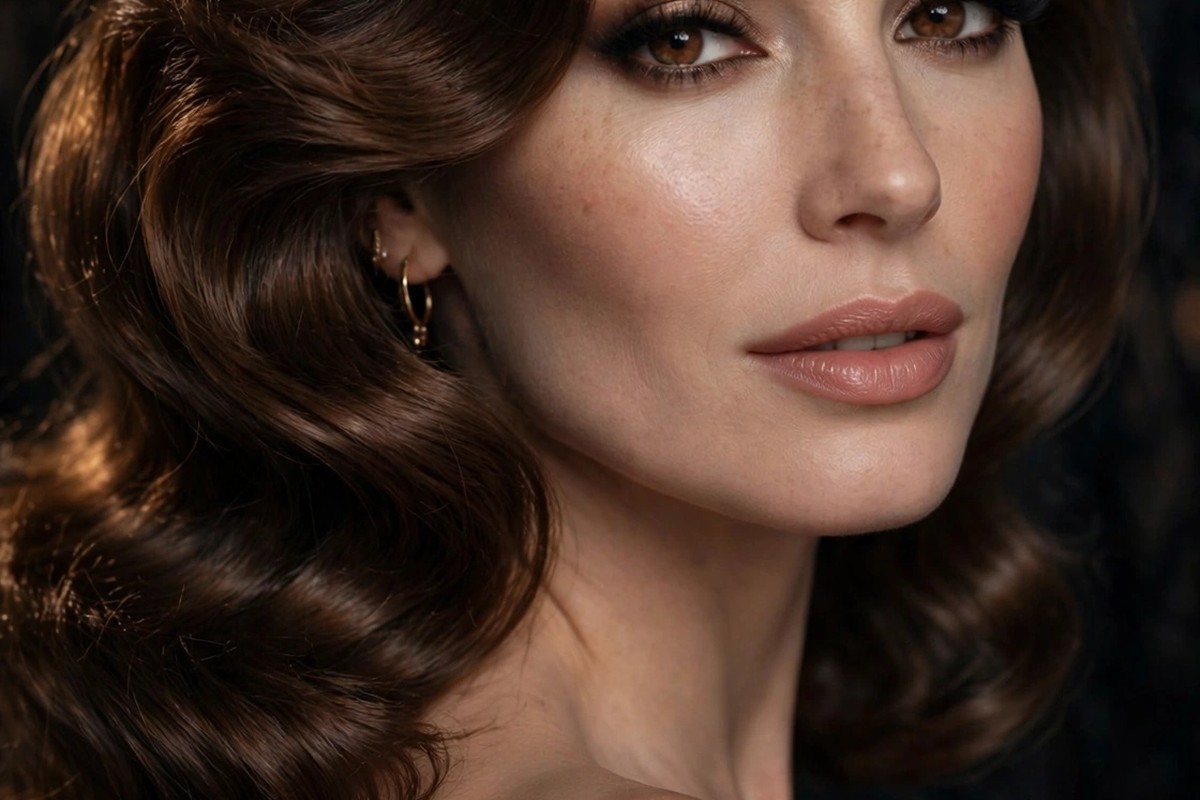
The celebrity favourite. A deep side part strengthens the wave pattern and makes long hair look sculpted and glamorous, especially with one side tucked behind the ear. Finish with a bold lip from our berry lipstick shade guide.
5. The low textured ponytail
A side part turns the simplest low ponytail into something with an actual silhouette. Keep the part sharp but the ponytail soft and slightly undone, the contrast seen on the Victoria Beckham runway.
6. The wet-look evening part
Keep the part precise, brush the front sections close to the head, and push the lengths behind the shoulders. Use styling gel sparingly: reflective at the roots, not crunchy from forehead to ends. Match it with an artistic beauty look from our lace makeup trend tutorial.
7. Off-centre braids
Shifting the part to one side creates an easy focal point and makes even simple braids look more sculptural, from box braids to loose festival plaits.
Side Parts and Face Shapes: A Quick Guide
Face-shape charts are a starting point, not a rulebook.
- Round faces: a deep side part adds angles and height, which visually elongates the face. Celebrity stylist Dimitris Giannetos specifically recommends side parts for round and heart-shaped faces.
- Square, heart and diamond faces: a softer, subtler sweep takes the edge off a strong jawline and sharp cheekbones, creating a more balanced finish.
- Oval faces: almost any depth works, so experiment freely with placement.
- Long faces: keep the part closer to the centre and add width through the lengths rather than extra height at the crown.
The Five-Minute Styling Routine
You do not need a full wash and blowout to test the trend. Try this routine first.
- Lightly dampen the roots at the front and crown rather than wetting all your hair.
- Draw the part one finger-width off centre with the end of a comb or your fingertip.
- Blow-dry the heavier side up and away from the scalp, then flip it back over once dry for instant volume.
- Tuck the lighter side behind your ear or pin it briefly while the roots cool and set.
- Finish the ends with a drop of oil, not a cloud of hairspray.
Be patient: hair trained to a centre part for years will try to fall back, and it may take a couple of washes before the new parting settles. Use no-crease setting clips while the hair dries to weigh down a stubborn hairline.
Conclusion
Side part hairstyles 2026 prove the smallest change can make the biggest difference. Move the line a finger-width or two, add lift at the roots, keep the texture soft and moving, and choose one point of polish. Before you book a haircut because your hair feels flat, change the line before you change the length.
Frequently Asked Questions
Which side part hairstyles from 2026 work best for fine hair?
Side part hairstyles from 2026 are genuinely kind to fine hair because flipping more hair to one side creates root lift without any teasing, which reads as instant volume. Start one finger-width off centre, blow-dry the heavier side upward before sweeping it over, and keep oils and heavy creams away from the roots so the lift survives the day.
How do I stop my new side part flipping back to the middle?
Create the part while your hair is wet so it dries into the new position, and use no-crease setting clips on the hairline while it sets. Blow-drying the roots in the opposite direction, then flipping them back once cool, also trains the hair to hold.
Which side should I part my hair on?
There is no scientifically correct side. Test both on damp roots in daylight and let your cowlick help decide: parting with it feels easier, parting against it gives more lift. Choose the side that creates useful volume and shape without requiring a daily fight against your natural growth pattern.
Do side parts suit round faces?
Yes, they are one of the most flattering choices for round faces. A deep side part introduces asymmetry that adds angles and height, visually elongating the face. Keep the part clean but the lengths soft, and avoid pairing it with a heavy fringe that shortens the face further.
How deep should a modern side part be?
Less deep than you think. Start about one finger-width away from the centre and move further only if you want more drama. The 2026 versions depend more on movement and softness than on the deepest possible line, so stop when the heavier side gains shape without the lighter side looking strained.